
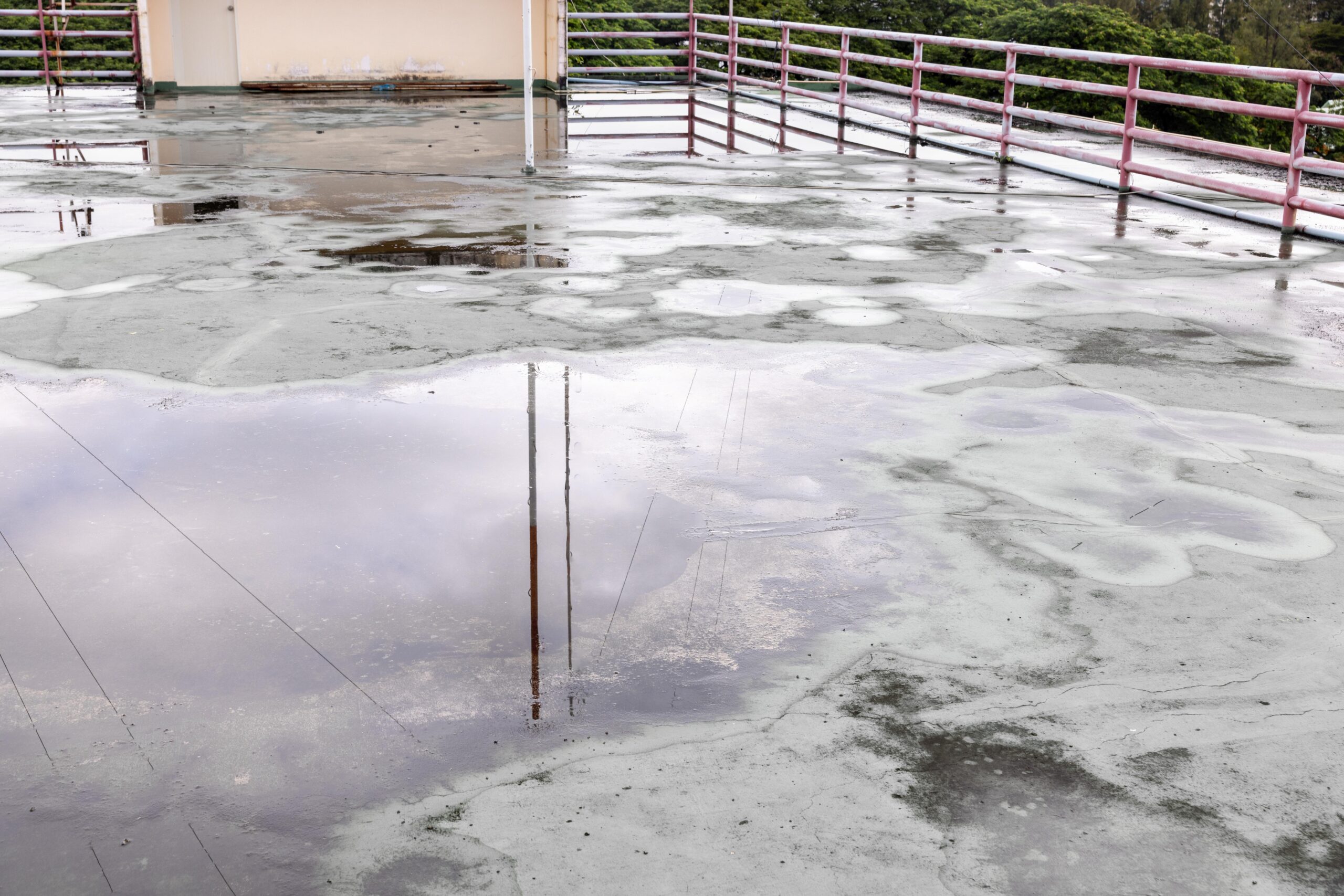
- Flat roof ponding occurs when standing water remains on a commercial roof for over forty-eight hours after rainfall.
- Tapered insulation systems create a strategic slope to guide water toward designated drainage points.
- Balancing scuppers and internal drains ensures adequate volume capacity during intense storms.
- Routine maintenance prevents debris from clogging critical drainage pathways.
Managing a commercial property requires constant vigilance, especially regarding the integrity of a commercial roofing system. Parish Construction and Roofing helps property owners safeguard their investments against structural compromise caused by poor water management. Flat roof designs are inherently susceptible to water accumulation if the drainage infrastructure is poorly engineered or maintained. For every one gallon of water that accumulates it adds 8.34 pounds to the roof. When water pools on a flat roof, it creates immense stress on the structural deck and accelerates membrane degradation. Our team focuses on engineering-focused solutions to optimize drainage, ensuring your building stays dry and structurally sound through every season.
The 48-Hour Rule: When Ponding Water Becomes a Problem
In the commercial roofing industry, standing water is not immediately catastrophic, but it becomes a major threat if it lingers. We evaluate standing water using the standard 48-hour rule. If water remains on a flat roof surface for more than forty-eight hours after rainfall, it is officially classified as ponding water. This accumulation happens due to structural sagging, improper initial sloping, or blocked drainage pathways. Ponding water acts as a magnifying glass for ultraviolet rays, accelerating membrane deterioration. Furthermore, the weight of standing water can cause roof deck deflection, creating deeper low spots.
Tapered Insulation Systems: Creating Slope on a Flat Surface
To fix standing water issues on an existing flat roof, we often utilize tapered insulation systems. While a flat roof looks completely level, it requires a slight slope to direct water toward drains. Tapered insulation is manufactured with a gradual slope, typically one-quarter of an inch per foot. When we design and install these rigid foam panels, we create a precise three-dimensional slope layout. This engineering approach eliminates low spots where water naturally gathers. By sloping the roof toward collection points, we successfully mitigate water accumulation without altering the building’s structural framing.
Scuppers vs. Internal Drains: Designing for Capacity
An effective drainage strategy requires matching the right hardware to the specific layout of your commercial roofing footprint. We analyze two primary drainage mechanisms: scuppers and internal drains. Scuppers are open components cut into perimeter parapet walls, allowing water to exit outward into downspouts. They are highly efficient for buildings with open perimeters and resist clogging. Internal drains are set into low points of the roof surface and connect to pipes inside the building structure. Designing for capacity requires evaluating regional rainfall data to size these drains correctly, preventing dangerous backups.
Maintenance Plans to Prevent Clogged Drains
Even the most advanced drainage design can fail if it is neglected. Debris like leaves, twigs, gravel, and dirt frequently settles in drainage components. We design comprehensive maintenance plans that address these vulnerabilities before they lead to severe leaks. Regular inspections should occur at least twice a year, specifically during autumn and spring. Cleaning out drain strainers and clearing debris from scuppers keeps the paths unobstructed. Our proactive maintenance approach ensures that your drainage components operate at peak capacity, extending the overall lifespan of your flat roof.
Eliminate ponding water on your commercial building. Contact our commercial team for a drainage analysis and taper system design.
Image credit: // Shutterstock // Toa55