Understanding the Basics
When evaluating commercial roofing systems in Louisiana, two of the most common single-ply options are EPDM and TPO. Understanding how each performs in our climate is critical when planning a commercial roof replacement.
👉 Learn more about our approach to commercial roofing systems.
EPDM (Ethylene Propylene Diene Monomer)
EPDM is a black rubber membrane that has been used in commercial roofing for decades. It is known for flexibility and cold-weather performance, and is still seen on many older flat roof systems.
Common EPDM advantages:
Proven track record
Flexible material
Lower initial material cost
However, for Louisiana commercial buildings, EPDM presents long-term performance challenges—especially when exposed to heat, moisture, and storm activity. These issues often surface during roof inspections.
TPO (Thermoplastic Polyolefin)
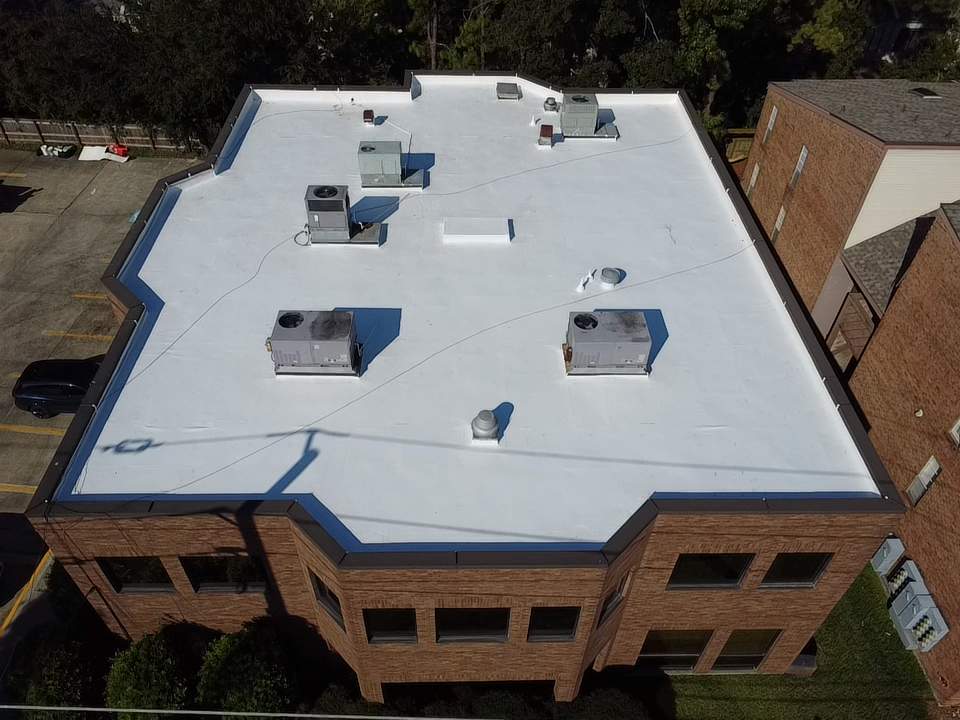
TPO is a heat-welded, white single-ply membrane engineered for high heat, UV resistance, and energy efficiency—all critical factors for commercial roofs in Louisiana.
Common TPO advantages:
Highly reflective white surface
Heat-welded seams
Strong resistance to UV and moisture
Energy-efficient performance
TPO is one of the most common systems we install during commercial roof replacements across the state.
Why Louisiana’s Climate Changes the Equation
Louisiana commercial roofs endure:
Extreme summer heat
High humidity year-round
Heavy rainfall
Hurricanes and tropical storms
Intense UV exposure
Roofing systems that perform well in northern or dry climates often age much faster here, leading to leaks, membrane failure, and premature replacement—especially after storm events.
Key Reasons TPO Outperforms EPDM in Louisiana
1. Heat & UV Resistance
EPDM’s black surface absorbs heat, driving rooftop temperatures extremely high. This accelerates material aging and increases HVAC load—an issue we commonly see during commercial roof assessments.
TPO’s white, reflective surface:
Reduces roof surface temperature
Minimizes thermal expansion stress
Slows material degradation
Lowers cooling costs
This makes TPO a strong fit for energy-efficient commercial roofing in Louisiana.
👉 See how we design energy-conscious roofing systems.
2. Seam Strength & Water Protection
EPDM seams rely on tape or adhesive. Over time—especially with heat, moisture, and movement—these seams can fail.
TPO seams are heat-welded, creating a single, continuous membrane:
Stronger seam integrity
Better resistance to ponding water
Reduced leak risk during heavy rain
For hurricane-prone areas, seam strength plays a major role in storm damage prevention.
3. Humidity & Mold Resistance
Louisiana’s humidity often traps moisture beneath roofing systems, leading to hidden deterioration.
TPO membranes:
Resist microbial growth
Are less susceptible to moisture infiltration
Perform better in consistently damp conditions
This is a key reason we recommend TPO during commercial roofing inspections and leak investigations.
4. Energy Efficiency & Operating Costs
Cooling costs are a major operating expense for Louisiana businesses.
TPO roofs:
Reflect solar radiation
Reduce HVAC demand
Help stabilize indoor temperatures
May qualify for energy-efficiency incentives
EPDM systems typically increase cooling loads due to heat absorption, which impacts long-term operating costs.
5. Long-Term Value (Not Just Initial Cost)
While EPDM may appear slightly cheaper upfront, total lifecycle cost often favors TPO in Louisiana due to:
Fewer seam failures
Lower energy expenses
Reduced heat-related degradation
Longer functional lifespan
This is especially important for owners planning long-term asset protection through preventive roof maintenance.
When EPDM Might Still Make Sense
There are limited scenarios where EPDM may still be appropriate:
Heavily shaded roofs
Smaller, less heat-sensitive structures
Temporary installations
Even in these cases, a professional commercial roofing evaluation is recommended.
Our Recommendation at Parish Construction & Roofing
Based on real-world performance, service history, and lifecycle cost analysis, we recommend TPO roofing systems for most commercial, industrial, and institutional buildings in Louisiana.
Our approach includes:
Climate-specific system design
Proper insulation and drainage planning
Manufacturer-approved installation methods
Long-term service and maintenance support
Learn more about our commercial roofing process.
Thinking About a New Commercial Roof?
If your building is due for replacement—or if you’re experiencing leaks, rising energy costs, or storm damage—our team can help determine whether TPO is the right solution for your property.
📍 Serving commercial clients across Louisiana
🔧 Roof repairs, replacements, and inspections
🏗 Built for Louisiana. Built to last.
👉 Contact Parish Construction & Roofing today to schedule a commercial roofing evaluation.
📢 Stay connected with us for updates and insights on commercial roofing projects via Parish Built on LinkedIn.