Key Takeaways
- Standing seam panels hide their fasteners beneath raised, interlocking seams; exposed fastener panels are screwed directly through the metal — and that one difference shapes how each roof performs over time.
- In the humid, salt-influenced air around Lake Pontchartrain, fewer surface penetrations and a corrosion-resistant metal help a roof hold up for the long haul.
- The right system depends on the home, its setting, and how long you plan to stay — Parish helps homeowners in Covington, Mandeville, and New Orleans weigh the options.
For homeowners across the Northshore and Greater New Orleans, a metal roof is one of the most durable investments you can make in your home. But “metal roof” isn’t a single product. Two systems dominate residential projects: standing seam and exposed fastener. Understanding how they differ — and how each holds up in South Louisiana’s humidity and storms — helps you choose a roof built to protect your home for decades. Parish Construction and Roofing installs metal roofing for homes in Covington, Mandeville, New Orleans, and the surrounding parishes.
Standing Seam vs. Exposed Fastener: What’s the Difference?
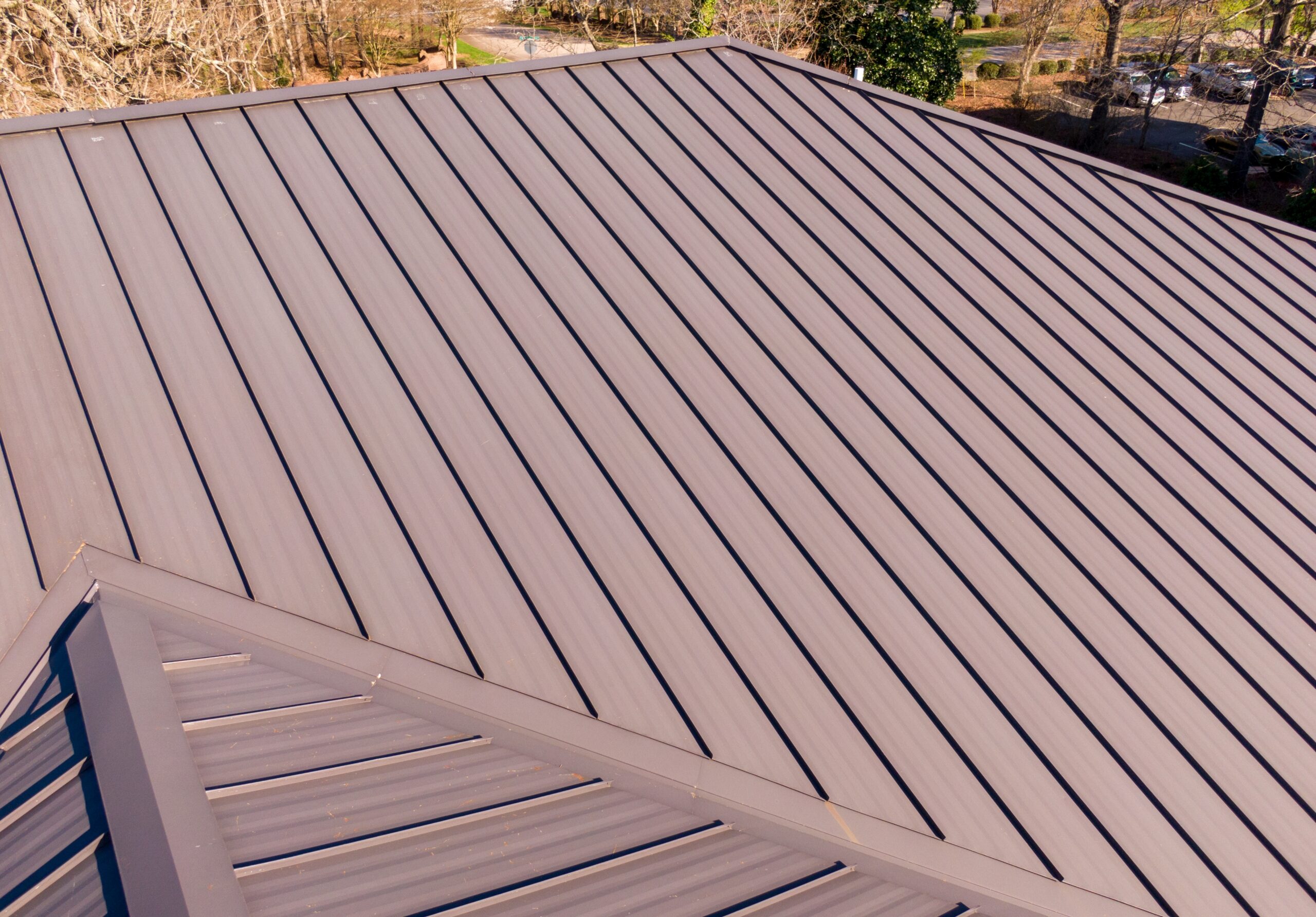
The two systems are defined by how their panels attach. Standing seam panels lock together along raised vertical seams, with the fasteners concealed underneath — nothing penetrates the exposed face of the roof. Exposed fastener panels (sometimes called through-fastened or screw-down panels) are secured with screws driven directly through the metal and into the deck, leaving the fastener heads visible across the surface. That single distinction drives most of the differences you’ll notice in appearance, maintenance, and long-term performance.
Why the Northshore Climate Raises the Stakes
The brackish moisture rolling off Lake Pontchartrain and the heavy humidity across Covington and Mandeville put any roof under constant stress. Every penetration in a panel is a potential entry point for water over time, and exposed fasteners rely on rubber washers that can loosen or wear as the metal expands and contracts in the heat. Because standing seam systems keep their fasteners concealed and seal along the seams, they present fewer vulnerable points in this demanding environment. The metal you choose matters too — a corrosion-resistant option is something our team walks through on every coastal and lakefront project.
Storm Protection and FORTIFIED Roofing
Both panel types can stand up to Louisiana weather, but wind performance and installation quality are what count when a storm rolls through. Metal roofing with interlocking panels resists wind uplift and can withstand winds exceeding 140 mph, and a properly installed metal roof may help reduce your insurance costs. Parish builds to FORTIFIED standards — a nationally recognized method developed by IBHS that strengthens roof edges, seals the deck, and improves attachment to guard against hurricanes, hail, and tornadoes up to EF-2 — whether your roof is shingle, tile, or metal.
Longevity and Maintenance
A quality metal roof can last 50+ years while resisting curling, cracking, mold, rust, and corrosion. Standing seam systems generally reach the upper end of that range with minimal upkeep, since there are no exposed fasteners to inspect or replace. Exposed fastener roofs typically have a shorter service life and call for periodic maintenance — fasteners and washers should be checked and re-tightened over the years to prevent leaks. For homeowners planning to stay put for the long term, that lower-maintenance profile is often what tips the decision. (See our broader comparison of metal roofing vs. asphalt shingles.)
Which Metal Roof Is Right for Your Home?
For most New Orleans and Northshore homeowners, standing seam is the premium choice — clean lines, a modern look, and long-term durability with little maintenance. Exposed fastener panels remain a practical, more economical option, and they make sense for outbuildings, workshops, or projects where the roof’s profile is less of a priority. Neither system is universally “better”; the right answer depends on your home’s design, its exposure to moisture and wind, and how long you plan to stay. (Still weighing your options? Start with our guide to roofing materials for Louisiana homes.)
Talk to Parish About Your Metal Roof
Choosing between standing seam and exposed fastener is easier with a contractor who knows South Louisiana’s climate firsthand. Whether you’re in Covington, Mandeville, or the Greater New Orleans area, our team can walk your property, explain the trade-offs, and recommend the system that fits your home. Contact us for a free consultation.
Image credit: // Shutterstock // Oak City Drone